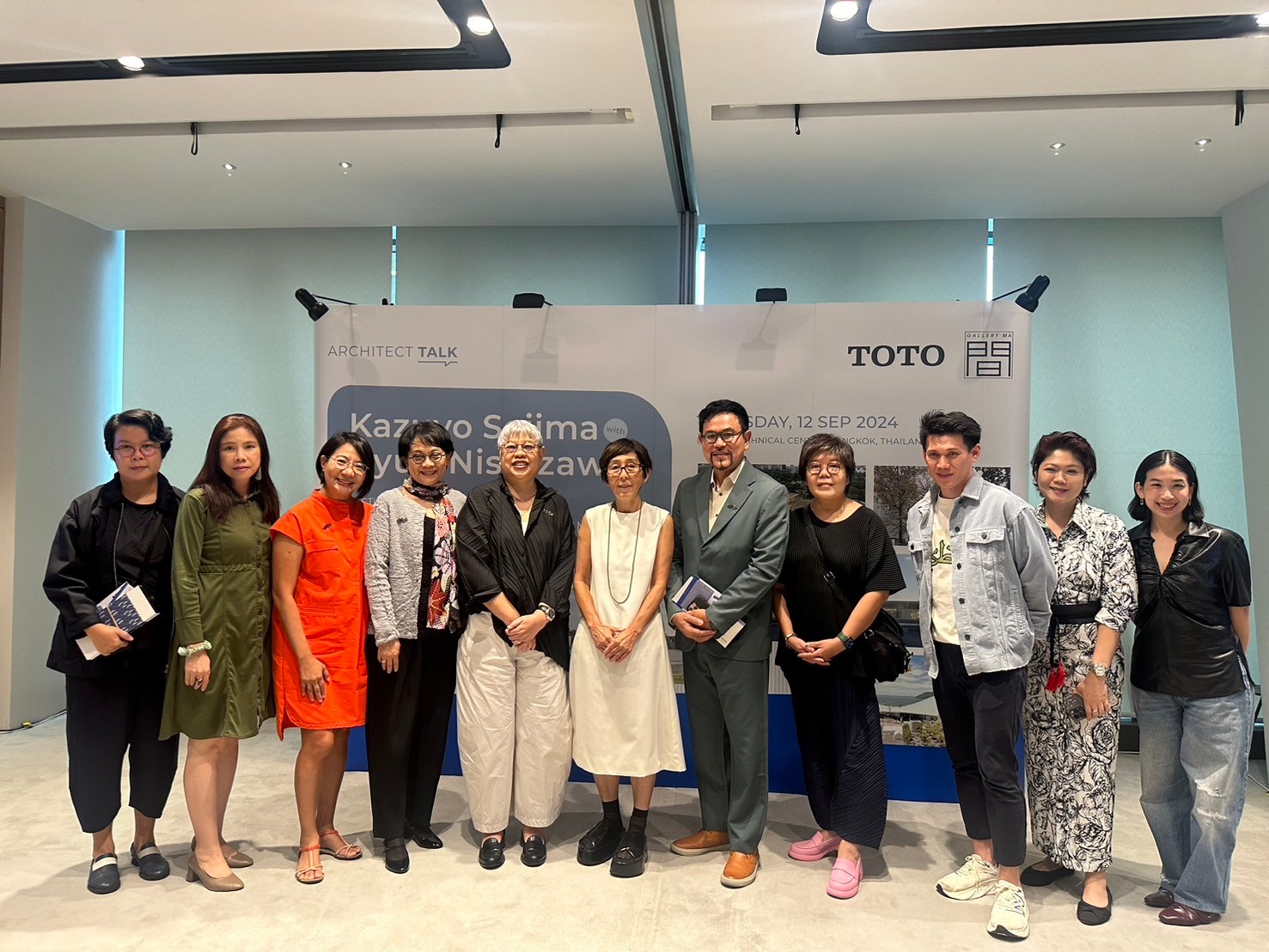
คุณมนต์ทิพย์ ลินน์ อัสโสรัตน์กุล ผู้บริหาร ML Estates เข้าร่วมงาน Architect Talk จัดโดย TOTO เมื่อวันที่ 12 กันยายน 2567 โดยมีสถาปนิกจาก #SANAA ชื่อดังชาวญีปุ่นทั้งสองท่าน คุณ Kazuma #Sejima และคุณ Rye #Nishizawa ให้เกียรติบรรยายแนวความคิดในการออกแบบ architecture design โดยใช้การเชื่อมต่อระหว่างสวน พื้นที่ภายนอก เข้ากับพื้นที่ภายใน เริ่มตั้งแต่การจัดวางผังแม่บท การจัดทางสัญจรทั้งภายนอกและภายใน รวมถึงการเลือกใช้สี วัสดุ เพื่อให้สถาปัตยกรรมเป็นส่วนหนึ่งของชุมชน โดยการยกตัวอย่างผลงานมาบรรยายได้แก่
- Bocconi New Campus – 2019 – Milan, Italy
- Le Louvre-Lens– 2005 to 2012 – Lens, Pas-de-Calais, France
- The Art Gallery of New South Wales, North Building – 2022
- 21st Century Museum of Contemporary Art– 1999 to 2004 – Kanazawa, Ishikawa, Japan
- New Kagawa Prefectural Gymnasium 2024
Overview of Sanaa Architects
Founded: 1995
Founders: Kazuyo Sejima and Ryue Nishizawa
Location: Tokyo, Japan
Awards: Pritzker Architecture Prize (Kazuyo Sejima and Ryue Nishizawa, 2010), among many others.
Work Philosophy
Sanaa’s design philosophy revolves around creating spaces that are fluid, transparent, and harmonious with their surroundings. They emphasize the following principles:
- Transparency and Lightness: Their designs often incorporate extensive glass facades and open plans. It allows natural light to flood the interiors and create a sense of connection between inside and outside spaces.
- Simplicity and Minimalism: Sanaa’s projects are characterized by their minimalist aesthetic, focusing on simplicity and the essential qualities of a space while avoiding unnecessary ornamentation.
- Fluidity and Flexibility: The firm aims to create flexible spaces that can adapt to various uses over time. Their designs often feature fluid, organic forms that break away from conventional architectural boundaries.
- Contextual Sensitivity: Sanaa pays close attention to the context of their projects, designing buildings that complement and enhance their surroundings while also addressing the specific needs and desires of their users.
- Innovation and Experimentation: The firm is known for pushing the boundaries of architectural design, experimenting with new materials and technologies to create unique and innovative structures.
Architecture Design Outstanding Projects
-
21st Century Museum of Contemporary Art, Kanazawa (2004)
- Description: This museum is celebrated for its circular plan and transparent facade, which create an open and fluid exhibition space. The building allows visitors to view art from multiple perspectives and fosters a sense of continuity between the interior and exterior environments.
- Impact: The museum has become a landmark for contemporary art and a model for how architectural form can enhance the experience of art and visitors.
-
New Museum, New York City (2007)
- Description: The New Museum features a stack of box-like volumes offset from each other, creating a dynamic and visually intriguing facade. The design maximizes the use of limited space while allowing for diverse gallery configurations.
- Impact: This project is notable for its innovative use of space in an urban context and has become a prominent cultural hub in New York City.
-
Grace Farms, New Canaan, Connecticut (2015)
- Description: Grace Farms is a multi-use facility designed to foster community and connection with nature. The building’s undulating, serpentine form blends seamlessly with the surrounding landscape and offers a range of spaces for different activities and gatherings.
- Impact: The project has been praised for its integration with the natural environment and its flexible, community-oriented design.
-
Sejima and Nishizawa’s Own Office (2008)
- Description: This office space, located in Tokyo, is a reflection of their design philosophy. It features a transparent and open layout that encourages collaboration and interaction among staff.
- Impact: The design of their office exemplifies their commitment to creating fluid, adaptable spaces and serves as a practical demonstration of their architectural principles
5. Bocconi University New Urban Campus (2020)
- Description located in Milan at the south edge area in the junction of old and new city landscapes.
- Impact: Each building has its own courtyard aiming to link the buildings to the city park. The exterior facade of each building have homogenous balconies with expanded aluminum metal screens surrounding them, which act as a filter providing a comfortable environment to every room while creating an integrated facade within city context.
6.Louve-Lens (2012)
- Description : located in Lens, France, The Louvre-Lens was built on a 20-hectare site that was occupied by the 9 and 9 bis mine shafts. This coal mining site was recolonized by nature after it was closed down in 1960.
- Impact : Selected in 2005 from 124 different entries, the design by Kazuyo Sejima and Ryue Nishizawa of the Japanese agency SANAA fulfilled many of the project’s scientific and cultural objectives. Their design, prompted by the idea of creating a gentle transition with the surroundings through transparency and openness to the outside, rejects ostentatious gestures in favour of architecture that is accessible and discreet without being mundane. The main structure follows the gentle slope of the site without ever exceeding six metres in height, leaving the tops of the trees visible in places. The architecture thus merges into its surroundings in a subtle and respectful way, without overwhelming it.
#mlestatesbkk
architecture design http://www.sanaa.co.jp/